Hampstead Property & Architecture Guide
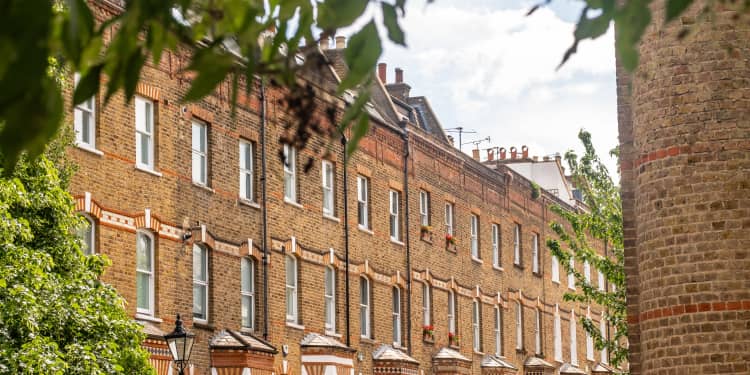
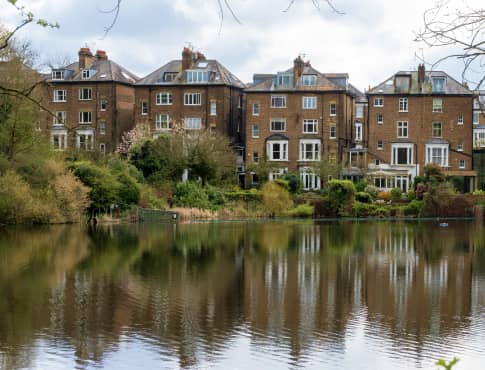
Hampstead’s property stock is among the most varied and historically significant in London. From Georgian terraces that date back t...



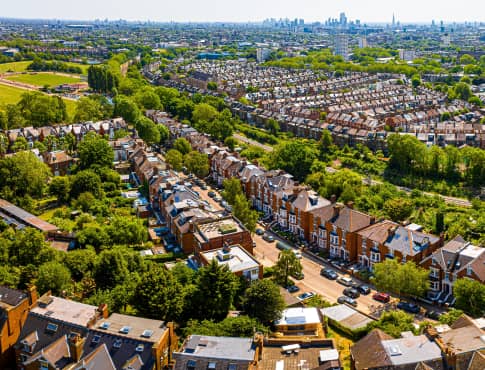
In Hampstead, the difference between one street and the next can be considerable. A terraced cottage on a quiet lane near Flask Walk might feel entirely different from a large detached house on Redington Road, even though they’re barely ten minutes’ walk apart. This is what makes micro-location so important here. The NW3 postcode is broad, and within it you’ll find distinct zones with their own character, property types and price points.
As estate agents specialising in Hampstead, Eaton Premier understands these differences well. Whether you’re looking for a period house with a walled garden or a modern flat near the Northern line, knowing which streets to focus on will save time and help you make a more informed decision. This guide breaks Hampstead down by its key streets and areas, covering where the best properties sit, where values are rising, and which pockets might be worth watching.
Church Row stands at the top of most lists. It’s the finest collection of early Georgian houses in Hampstead, running from Frognal to Heath Street with St John-at-Hampstead Church framing the western end. Houses here rarely come to market, and when they do, they attract significant interest. The Pevsner guide described it as “the best street in Hampstead”, and the wrought-iron gates, period lamp posts and the fact that most properties retain their original facades make it genuinely exceptional.
Redington Road, Templewood Avenue and Greenaway Gardens form a cluster of wide, tree-lined streets to the west of the High Street. These are home to Hampstead’s largest and most expensive houses, typically detached 1920s and 1930s villas in red brick, set on generous plots. Sales on these roads regularly exceed £5 million and the finest examples, particularly those with double-fronted facades and long rear gardens, have changed hands for north of £7.5 million in recent years.
Fitzjohn’s Avenue offers a different proposition. This broad boulevard sweeps south from the village towards Swiss Cottage, lined with tall Victorian houses and mansion blocks. It’s one of the most impressive-looking streets in north-west London, and the lateral apartments in its mansion blocks are particularly sought after by downsizers and professionals who want generous proportions without the upkeep of a house. Family houses on the turnings off Fitzjohn’s, such as Lyndhurst Road, also do well.
Well Walk connects the High Street to the Heath and has a strong sense of history, having been named after the natural springs that made Hampstead a spa town in the 1700s. Properties here range from Georgian cottages to more substantial Victorian houses, and its position means you can walk onto the Heath in under a minute. Downshire Hill, just south of the village, is another family favourite, with handsome Victorian terraces that have generous front gardens and period detailing in excellent condition. Keats Grove sits nearby, notable not just for the poet’s former house but also for its quiet, leafy character.
Hampstead Village sits at the centre, clustered around the High Street, Heath Street and the lanes that run between them. This is where the conservation area is most tightly drawn, and where the oldest and most historically important buildings are concentrated. Holly Walk, Holly Mount, Hampstead Square and New End Square all have that quiet, slightly removed feel that defines the village core. If you want to be able to walk out to an independent coffee shop, a good pub and the Heath all within five minutes, this is where to look.
The Frognal area, to the west, is noticeably different. It’s quieter and more spacious, with wider plots and a higher proportion of detached houses. The roads here feel almost suburban in places, though they’re still firmly within NW3. University College School‘s main campus sits on Frognal, which keeps demand strong from families wanting to be within easy walking distance of the school. Frognal Gardens, Frognal Lane and Frognal Rise are all worth knowing, offering a more discreet setting than the village itself.
South of the village, the area around South End Green and Hampstead Heath Overground station has a more relaxed, everyday feel. There are good independent cafés, a respected bookshop in Daunt Books, and a range of property that tends to be slightly more accessible in terms of price compared to the village centre. The Crofts, a collection of roads including Hollycroft Avenue, Ferncroft Avenue and Rosecroft Avenue, are tucked between Finchley Road and Heath Street. These tree-lined streets have well-preserved three and four-storey houses, many still in single-dwelling use, and they offer a notably homely feel that’s hard to find elsewhere in Hampstead.
Price variation across Hampstead is significant. According to Rightmove data, the overall average property price in Hampstead over the past year was approximately £1.62 million. But that figure conceals enormous differences between property types and locations. Flats sold for an average of around £1m, while terraced homes averaged roughly £2.45 million – and detached homes £6.29m. The gap between neighbouring streets can also be striking. A two-bedroom flat on a less fashionable turning off Finchley Road might sell for £700,000, while a similar-sized flat in a period house on Well Walk could go for well above £1 million.
What drives these differences? Heritage and architectural quality play a big role. Houses on streets with conservation area protections, mature trees and well-maintained period frontages consistently command higher prices. Proximity to the Heath adds a premium too, particularly for properties with views or direct access. Parking arrangements matter more here than in many London areas, as on-street parking is restricted in much of NW3, and houses with off-street parking or garaging benefit accordingly. Road width, the presence of a front garden, even the quality of the street trees can all shift values by a measurable amount.
Not every good street in Hampstead is well known outside the area. Cannon Lane, for instance, runs between Frognal and Finchley Road and has a selection of well-proportioned houses on a peaceful, tree-lined road that rarely features in property guides. It’s a favourite with people who already live in the area and know the streets well, which is often how properties there find buyers before reaching the open market.
Perrin’s Lane and Perrin’s Walk, close to the village centre, offer period cottages with an unusual amount of privacy for somewhere so central. They’re tucked away behind the High Street and feel distinctly removed from it. The Christchurch Hill area, just south of Hampstead Square, has handsome Victorian houses on a steep, quiet road that leads down towards Belsize Park. It isn’t as well known as Downshire Hill or Well Walk, but the quality of the housing stock is strong, and prices can be slightly more grounded as a result.
South Hill Park, which stretches down towards Hampstead Heath station, has also seen growing interest. The houses here are largely Victorian terraces in good condition, with the Heath on the doorstep and an Overground connection for convenient commuting. It’s one of the more accessible entry points into Hampstead property for buyers who want the NW3 postcode without the top-tier price tags.
Hampstead’s streets each tend to have their own architectural identity. The Georgian concentration is strongest on Church Row, Holly Walk, Flask Walk and Hampstead Square, where you’ll find 18th-century brick terraces with their original proportions largely unchanged. Victorian houses dominate Downshire Hill, Keats Grove and the roads between Heath Street and South End Green. The grander Edwardian and inter-war properties sit along Frognal, Redington Road and Templewood Avenue.
There are some distinctive oddities too. Holly Mount is a tiny, elevated square reached by a flight of steps, home to the Holly Bush pub and a handful of period houses. Hampstead’s mews lanes, though few in number, offer compact, self-contained homes on lanes that were originally built for stabling. The Bishops Avenue, sometimes called Billionaires’ Row, sits on the eastern edge towards East Finchley and has a rather different character to the village. Its large detached houses on generous plots appeal to a specific buyer profile, and several are undergoing major redevelopment.
Hampstead has a higher proportion of owner-occupiers than many parts of inner London. The family houses on roads like Downshire Hill, Redington Road and the Frognal streets are overwhelmingly owner-occupied, and they tend to change hands infrequently. Rental properties are more concentrated in the mansion blocks along Fitzjohn’s Avenue and in flat conversions along Rosslyn Hill and Haverstock Hill, where demand from professionals and international tenants keeps the market active.
Some newer developments have introduced a build-to-rent element. The Vabel Haverstock on Haverstock Hill caters to this market, as do certain apartment blocks closer to West Hampstead. For landlords, the strongest rental returns tend to come from well-finished one and two-bedroom flats near the tube station, where tenant demand is consistent and voids are minimal. Larger family rentals also do well, particularly for tenants relocating from overseas who want to be near the international schools.
While Hampstead isn’t an area that’s undergoing the kind of wholesale regeneration seen in other parts of London, there are several developments worth watching. The conversion of the former Hampstead Police Station and Courthouse on Rosslyn Hill into residential use will bring new homes to a Grade II listed building in a prime location, with completion expected in 2026.
On The Bishops Avenue, Bishops Avenue Gardens by developer Valouran, with interiors by Albion Nord, is one of several projects refreshing the housing stock on this famous road. The Oren, a £150 million later-living development on West Heath Road, and Riverstone Bishops Avenue, are introducing a new category of luxury retirement property to Hampstead that didn’t previously exist.
Infrastructure changes tend to be incremental rather than transformational. Camden Council continues to invest in cycling infrastructure, public realm improvements and environmental measures such as low-traffic neighbourhoods. These are relatively small-scale, but they do influence which streets feel more pleasant to live on, and in some cases, they’ve had a noticeable effect on property demand on the quieter residential roads.
The Bishops Avenue and Redington Road regularly feature among the most expensive. Church Row is also at the top end, though houses there come to market very rarely.
Downshire Hill, the Frognal streets and the Crofts are all popular with families. They offer larger houses, close proximity to good schools and a quieter setting than the village centre.
South Hill Park and the area around Hampstead Heath Overground station have seen growing interest, with slightly more accessible prices and good transport links. Christchurch Hill is another road that knowledgeable local buyers tend to favour.
Fitzjohn’s Avenue and the mansion blocks along Rosslyn Hill are strong options for well-proportioned rental flats. For newer stock, developments like Hampstead Manor on Kidderpore Avenue and Novel House on New End offer modern finishes within the village.
The right street matters in Hampstead. Choosing well means understanding the area’s distinct zones, knowing which roads are likely to hold their value, and having access to properties that don’t always appear on the open market. Eaton Premier provides exactly that kind of local insight, paired with a fully personal service that handles every aspect of your property transaction.
To discuss your requirements, call 020 3427 5682, email info@eatonpremier.co.uk, or get in touch through our website. We’re based at 53 Davies Street, Mayfair, and we cover Hampstead alongside other prime London areas including Belgravia, Kensington, Chelsea and Mayfair.

Hampstead’s property stock is among the most varied and historically significant in London. From Georgian terraces that date back t...
Hampstead sits high above London on one of the capital’s tallest hilltops, 134 metres above sea level. It’s a place where narrow