Key Streets & Areas in Hampstead
In Hampstead, the difference between one street and the next can be considerable. A terraced cottage on a quiet lane near Flask



Hampstead’s property stock is among the most varied and historically significant in London. From Georgian terraces that date back to the early 1700s through to carefully inserted modernist houses from the 1930s, the area tells the story of English domestic architecture across several centuries.
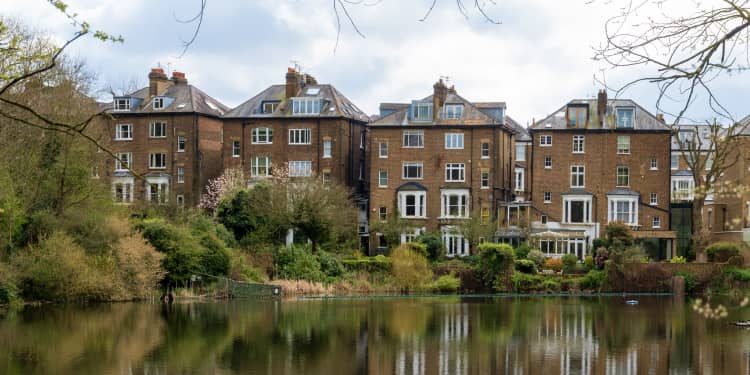
What makes Hampstead unusual is how well preserved so much of it remains. Strict conservation rules, a long tradition of careful ownership, and the sheer quality of the original construction have all contributed to an area where period detail is genuinely intact rather than merely suggested.
As luxury estate agents covering Hampstead, Eaton Premier regularly advises buyers on the particular considerations that come with purchasing in a conservation area. This guide covers the types of property you’ll find here, the architectural character that defines them, and the key streets where the finest examples stand.
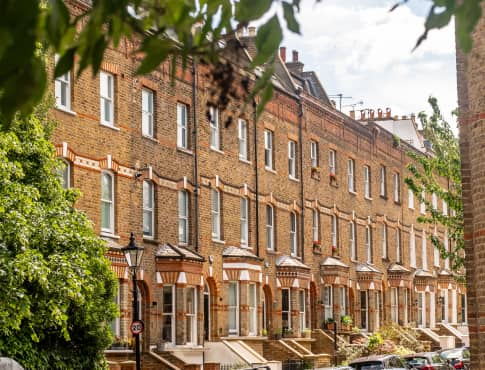
The Georgian townhouse is probably Hampstead’s most recognisable property type. Church Row, widely considered the best-preserved Georgian street in the area, features early 18th-century houses with their original wrought-iron gates, railings and lamp posts still in place. These are typically three to five storeys, built in red or brown brick, with sash windows, panelled front doors and generous proportions inside. Many retain original features like wall panelling, cornicing and working fireplaces.
Victorian terraces and villas make up a large portion of the housing, particularly on roads like Downshire Hill, Willow Road and Christchurch Hill. They tend to be broader and taller than their Georgian predecessors, with bay windows, decorative plasterwork and more elaborate garden settings. Some of the grander Victorian properties were built as family houses with servants’ quarters, though most have since been reconfigured for modern living.
Edwardian houses appear throughout the Frognal area and along roads branching off Heath Street. These are recognisable by their red-brick facades, generous porches and lighter interior layouts compared to their Victorian counterparts. The Arts and Crafts movement left a strong mark on Hampstead too, with several notable examples by architects like C.F.A. Voysey. These houses tend towards irregular, asymmetric designs with handcrafted detailing, leaded glass and half-timbered gables.
Large detached houses from the 1920s and 1930s, many in neo-Georgian or arts-influenced styles, sit on roads like Redington Road, Templewood Avenue and Greenaway Gardens. These are among the most valuable properties in the area, often set on substantial plots with long gardens. Modern flats exist as well, mainly through careful conversions of larger period houses and a small number of purpose-built developments, though strict planning rules mean new construction is limited.
Hampstead was one of the first areas in London to receive conservation area designation, following the Civic Amenities Act of 1967. The Hampstead Conservation Area, managed by Camden Council, covers the historic village core and extends across much of the surrounding residential streets. An Article 4 Direction applies across the area, which removes certain permitted development rights. This means that changes to the front of a property, including alterations to windows, doors, brickwork or boundary walls, require explicit planning permission from the council.
The Redington/Frognal Conservation Area sits to the west, known for its spacious plots, mature trees and detached houses in a variety of styles. Camden Council’s conservation area appraisal provides detailed guidance on what alterations are acceptable and what will be refused. Anyone considering work to a property here should consult this document early in their planning.
Hampstead has over 300 listed buildings. Church Row alone contains multiple Grade II and Grade II* entries, while Fenton House on Hampstead Grove is Grade I listed. Listed building consent is required for any alterations that affect the character of a listed property, and carrying out work without consent is a criminal offence. This is worth bearing in mind when budgeting for renovations, as the approval process can add time and cost, but it also means the quality of the surrounding architecture is protected for the long term.
Church Row remains the most architecturally celebrated street in Hampstead. The Pevsner Architectural Guide called it simply “the best street in Hampstead”, and houses here, when they do come to market, command prices that reflect that status. Well Walk runs from the High Street towards the Heath and has a strong period character with houses on both sides dating from several eras. Downshire Hill is favoured by families looking for slightly larger Victorian properties with well-kept front gardens.
Redington Road, Templewood Avenue and Winnington Road are home to some of the largest and most expensive houses in Hampstead. Properties here are typically detached, set back from the road behind hedges or walls, and come with gardens of a size you won’t easily find elsewhere in central London. Recent sales on these roads have ranged from roughly £4.75 million to above £7.5 million. Fitzjohn’s Avenue, which sweeps down towards Swiss Cottage, offers imposing Victorian houses and generously proportioned mansion flats.
New-build activity in Hampstead is constrained by the conservation area rules, but that hasn’t stopped a handful of notable projects from coming forward. Hampstead Manor on Kidderpore Avenue involved the conversion of Grade II listed buildings into high-specification apartments, set within landscaped grounds. Novel House on New End brought contemporary apartments to the heart of the village while respecting the scale of the existing streetscape.
The former Hampstead Police Station and Courthouse on Rosslyn Hill, a Grade II listed building dating from 1913, received planning consent for residential conversion in 2025 with completion expected in 2026. On The Bishops Avenue, several major redevelopment projects are either underway or recently completed, with new luxury houses replacing older stock. Fitzjohn’s, a later-living development on Fitzjohn’s Avenue, has introduced a new residential concept to the area, offering luxury apartments with on-site amenities for over-55s. Belle Vue on Hampstead Way offers a similar proposition for over-60s, close to the Heath.
One of the things that sets Hampstead’s period housing apart is how much original detail survives. Georgian properties on streets like Church Row and Holly Walk commonly retain their original timber sash windows, some with their original glass still in the frames. Internal features to look for include dado rails, picture rails, cornicing, panelled shutters and original stone or marble fireplaces. Ceiling heights in Georgian houses are often 2.8 to 3.2 metres on the principal floors, dropping on the upper storeys.
Victorian properties add bay windows, ornate ceiling roses, encaustic tile floors in hallways and more elaborate chimneypieces. Rooms tend to be generous, with reception rooms of 18 to 25 square metres being fairly standard in the larger houses. Many have retained their original staircases with turned balusters and carved newel posts. The Edwardian houses on Frognal often have wider hallways and more daylight than their Victorian neighbours, a shift in taste that favoured airier, less cluttered interiors.
The Arts and Crafts houses are particularly prized for their craftsmanship. You’ll often find hand-made tiles, specially commissioned stained glass and bespoke ironwork that was designed as an integral part of the building rather than added later. These houses were built to stand apart from mass production, and that intention still shows.
Property sizes in Hampstead vary considerably, even on the same street. A one-bedroom flat in a converted period house might measure 40 to 55 square metres, while a two-bedroom flat in a mansion block could stretch to 90 square metres or more. Terraced houses typically range from 130 to 230 square metres across three or four floors, depending on whether a basement or loft conversion has been carried out.
The large detached houses on roads like Redington Road regularly exceed 400 square metres, and the very largest, often described as ambassador-style houses, can measure above 700 square metres. Bedrooms in Victorian and Edwardian houses tend to be well proportioned, with master bedrooms of 16 to 22 square metres being typical. Gardens behind terraced properties on roads like Downshire Hill can be 15 to 25 metres in length, while the detached houses on the western side of Hampstead often sit on plots of a quarter of an acre or more. Off-street parking is available on many of the wider residential roads, and several of the larger properties have gated driveways or garaging.
Gardens are an important part of Hampstead property. The larger detached houses on the western roads typically have both front and rear gardens, with rear plots often extending to 30 metres or more. Many are well established, with mature trees, hedging and planting that contribute to the overall leafy character of the area. Some of the finest examples on Church Row have walled gardens that stretch to over 100 feet.
For flats, outdoor space is more limited, though many conversions of larger houses include use of communal gardens, and ground-floor flats often come with dedicated patio or garden areas. Purpose-built developments like Hampstead Manor include landscaped communal grounds. Balconies and roof terraces are less common in the older stock due to conservation restrictions, but where they exist, particularly on upper floors with Heath-facing aspects, they’re highly valued and command a notable premium.
Extensions are possible but require planning permission, and for listed buildings, listed building consent as well. The Article 4 Direction removes many permitted development rights, so even relatively minor works to the front of a property need council approval. Camden’s conservation area design guide sets out what’s likely to be acceptable.
Flats account for the majority of sales, often conversions of larger Victorian and Edwardian houses. However, the area also has a significant number of terraced, semi-detached and detached houses, particularly on the roads further from the village centre.
Yes. While the area is best known for its period architecture, there are examples of modernist houses from the 1930s, including 2 Willow Road by Ernő Goldfinger, as well as recent developments like Novel House and Hampstead Manor. New construction is limited but not impossible, subject to planning approval.
Detached houses typically start from around £3.5 million and can exceed £10 million for the finest examples on roads like Redington Road and Winnington Road. Pricing depends on size, condition, garden size and proximity to the Heath.
Buying or selling in Hampstead requires an understanding of the area’s architectural heritage, the conservation rules that apply, and the particular expectations of buyers in this market. Eaton Premier offers a personal, bespoke service for clients navigating the Hampstead property market, whether you’re acquiring a period house, selling a family home or looking for a luxury rental.
Get in touch to arrange a consultation. Call us on 020 3427 5682, email info@eatonpremier.co.uk, or book a property valuation directly through our website. We also invite you to register with us to hear about off-market opportunities before they’re publicly listed.

In Hampstead, the difference between one street and the next can be considerable. A terraced cottage on a quiet lane near Flask
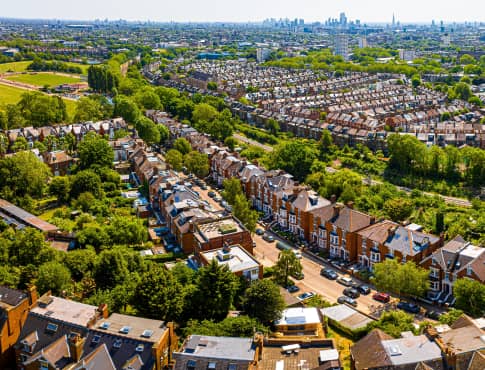
Hampstead sits high above London on one of the capital’s tallest hilltops, 134 metres above sea level. It’s a place where narrow